Is Stem Cell Therapy for Hair Loss Different for Men and Women? The New Science of Regenerative Hair Restoration
Medically Reviewed by: Dr. Simran Sethi – Regenerative Medicine & Dermatology Specialist
Last Updated: August 3, 2026
Hair Loss Isn’t Just Hair Loss. It’s Biology, Identity, and Timing
Hair loss is one of the most searched health concerns globally and one of the most misunderstood. For most people, it begins quietly. A little extra shedding. A slight change in volume. A subtle shift in how your hair frames your face. Then one day, it becomes undeniable: “This is happening and what can I do about it?”
Hair follicle biology research has shown that hair growth depends on complex communication between hair follicles, stem cells, blood vessels, immune cells, and the surrounding tissue environment. When these signaling pathways become disrupted through aging, inflammation, hormonal changes, or reduced circulation, hair growth can slow and follicles can progressively weaken.
Here’s what modern medical science now makes clear. Hair loss is not just a cosmetic issue. It is a biological signal that your body is changing.
And most importantly:
👉 Hair loss in men and women is fundamentally different.
Research by Sinclair R, Patel M, Dawson TL Jr et al on female pattern hair loss confirms that women often experience diffuse thinning driven by multiple factors including hormonal changes, inflammation, genetics, nutritional status, and aging. This differs significantly from the more predictable DHT-driven pattern commonly seen in men.
In men, hair loss is typically driven by:
- DHT (dihydrotestosterone)
- Hair follicle miniaturization
- Receding hairline and crown thinning
In women, it is often more complex and systemic:
- It is led by hormonal fluctuations (especially estrogen decline)
- There is diffuse thinning across the scalp
- It is often accompanied by inflammation, stress, and metabolic changes
Hormonal regulation plays a critical role in hair growth. Research demonstrates that androgens, estrogen, thyroid hormones, cortisol, insulin, and metabolic factors all influence hair follicle cycling, growth duration, shedding, and follicular health.
👉 This is why the same treatment does not work equally well for everyone.
Why Traditional Hair Loss Treatments Often Fall Short
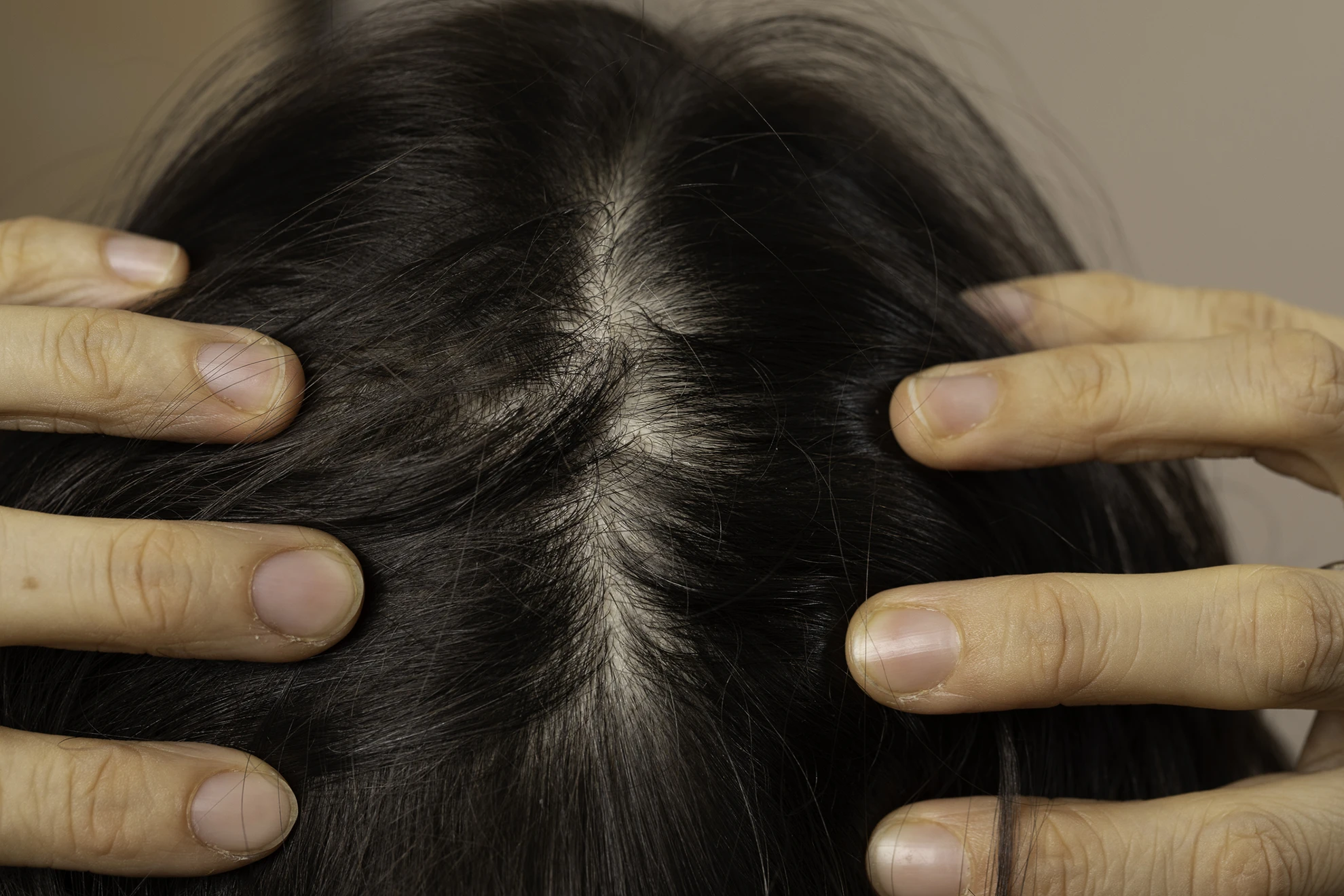
Most conventional treatments focus on blocking DHT or stimulating hair growth temporarily, but they can miss a critical factor which is that the scalp environment is deteriorating which includes:
- Reduced blood flow
- Chronic low-grade inflammation
- Poor cellular signaling
- Declining regenerative capacity
👉 If the environment is unhealthy, hair follicles cannot thrive.
📊 Hair Loss & Regenerative Treatment Statistics
- Up to 50% of women and 70% of men experience noticeable hair loss by age 50
- Hair follicle activity can decline by up to 40% with age
- PRP treatments have shown 20–40% increases in hair density
- Collagen production declines ~1% per year after age 20
- Up to 30% of hair thinning in women is hormonally driven
Importantly…
- Early treatment improves outcomes by 60–70%
- Combination therapies significantly outperform single treatments
The Psychological Impact of Hair Loss
Hair is deeply tied to identity and confidence. When hair thins:
- Self-image shifts
- Confidence drops
- Social behavior can subtly change
From a neuroscience perspective your brain links appearance to identity and reward pathways when appearance declines which means that loss of motivation and confidence can follow. And likewise, when hair appearance improves it can support confidence, energy, and engagement.
The Science Behind Stem Cell Therapy for Hair Loss
Modern hair restoration has evolved dramatically. We are no longer just treating hair, we are restoring biology.
How Stem Cell Therapy Works for Hair Loss
Stem cell–based treatments (including exosomes) do not simply “add hair.”
👉 They repair and optimize the follicle environment
They deliver:
- Growth factors
- Anti-inflammatory signals
- Regenerative cellular messaging
This helps:
- Reactivate dormant follicles
- Improve scalp circulation
- Extend the hair growth phase
They help your body remember how to grow hair.
Why Regenerative Medicine Is More Effective
Traditional treatments = symptom management. Regenerative treatments = system restoration which is the key difference. Results include:
- Stronger, thicker hair
- Improved density
- Better scalp health
Does Stem Cell Therapy for Hair Loss Really Work for Men and Women?
What Stem Cell Therapy Actually Delivers
Modern treatments don’t typically inject whole stem cells.
Instead, they use stem cell–derived signaling molecules (exosomes + growth factors). You can think of these as “biological instructions” your body understands immediately
These Signals Do 4 Critical Things
1. Reactivate Dormant Follicles
Stem cell signals tell follicles to “Wake up. Start producing again.” This helps move follicles back into the anagen (growth phase)
2. Improve Blood Flow to the Scalp
Hair follicles need oxygen and nutrients. Stem cell signaling:
- Promotes microcirculation
- Improves vascular support
And Better blood flow = better growth conditions
3. Reduce Inflammation (A Hidden Root Cause)
Most people don’t realize that chronic low-grade inflammation is one of the biggest drivers of hair loss. Stem cell therapies:
- Calm inflammatory signals
- Restore balance in the scalp environment
👉 And this protects follicles from ongoing damage
4. Restore Cellular Communication
As we age, cells stop “talking” to each other efficiently. Stem cell signals improve communication between:
- Follicles
- Skin cells
- Blood vessels
This leads to:
- Stronger hair
- Better growth cycles
- Healthier scalp tissue
Why Stem Cell Therapy Works Better Than Older Treatments
Let’s compare these.
The Old Approach:
- Forces hair growth
- Blocks hormones
- Provides temporary stimulation
The New Regenerative Approach:
- Restores the scalp environment
- Reactivates natural biology
- Supports long-term function
👉 This marks a shift from cosmetic treatment to biological restoration
Why Combination Treatments are the Future
Stem cell therapy is powerful but when combined, it provides significant additional support for treating hair loss.
For example, PRP + Stem Cells + Peptides can provide Full System Activation providing hair loss is noticed and treated soon thereafter. Here is what each treatment does:
- PRP (Platelet-Rich Plasma) delivers your body’s own growth factors. A randomized, placebo-controlled, double-blind clinical trial conducted by Alves and Grimalt, demonstrated that platelet-rich plasma (PRP) significantly increased hair density, terminal hair count, and anagen-phase hair growth in patients with androgenetic alopecia, supporting its role as a regenerative hair restoration treatment.
- Stem Cell Signals (Exosomes) can amplify repair and regeneration
- Peptides fine-tune and sustain the response
What This Combination Can Do
- Extend the hair growth phase
- Thicken existing strands
- Improve follicle strength
- Enhance scalp quality
👉 Instead of just “growing hair,” you are rebuilding the system that grows hair
Why Results Take Time (And Why That’s a Good Thing)
This is important for setting expectations. Hair grows in cycles:
- Growth (anagen)
- Transition (catagen)
- Rest (telogen)
Stem cell therapy works by resetting and optimizing this cycle
What Patients Typically Notice
In the first 4–6 weeks patients may notice:
- Reduced shedding
- Healthier scalp
Within 2–3 months they may see signs of:
- Early regrowth
- Improved texture
In 4–6 months they may see:
- Visible density improvement
👉 The timeline reflects real biological repair, not a temporary cosmetic fix
Why Men and Women Respond Differently
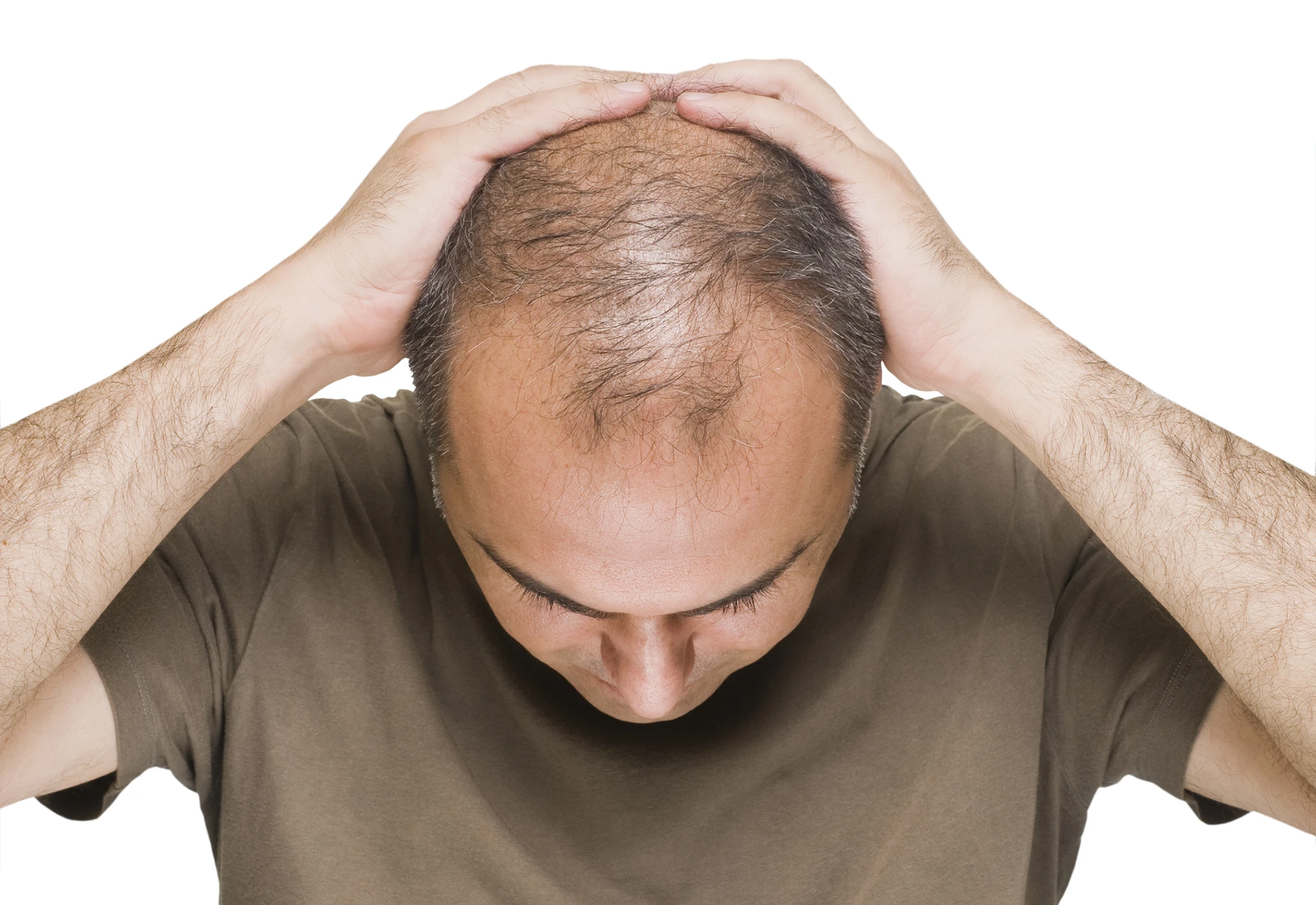
Hair loss may look similar in men and women, but the biology behind it is very different—and that’s why treatment must be tailored.
In men, hair loss is primarily driven by DHT (a hormone derived from testosterone), which gradually shrinks hair follicles over time. This process, known as follicle miniaturization, leads to thinning hair and eventual loss. Because the cause is more localized, treatment in men often focuses on protecting and reactivating the follicles directly.
In women, hair loss is usually more complex and influenced by multiple factors at once. Hormonal changes—especially declining estrogen—along with thyroid function, stress, inflammation, and nutritional deficiencies can all impact hair growth. Instead of a receding hairline, women typically experience diffuse thinning across the scalp.
Because of this, women often require a more comprehensive approach. While stem cell therapy can significantly improve follicle function and scalp health, the best outcomes are achieved when it is combined with hormonal support, nutritional optimization, and inflammation control.
The Bigger Picture: This Is About More Than Hair
Here’s what most people don’t necessarily expect. When you improve the scalp environment:
- The Skin quality improves
- Circulation improves
- Inflammation decreases
You’re not just improving hair. You’re improving tissue health overall
The Science
Stem cell therapy does not “add hair” It reactivates your body’s ability to grow hair. Hair growth depends on:
- Blood flow
- Hormones
- Inflammation
- Cellular communication
Stem cell therapy aims to improve all four at once. Clinical research by Fukuoka H, Narita K, and Suga H investigating adipose-derived stem cell-conditioned media demonstrated significant increases in hair density and hair count in both male and female patients, highlighting the regenerative potential of stem cell signaling molecules in hair restoration.
A recent systematic review examining exosome therapy for hair restoration found encouraging evidence that exosomes may improve follicle signaling, reduce inflammation, enhance tissue regeneration, and support hair growth in patients with androgenetic alopecia.
Final Insight
Hair loss is rarely permanent in the early stages. It is however a signal that should be acted upon and not a final outcome as it was in the past. With modern regenerative medicine you can restore the biology that creates it.
Combination Therapy: The Gold Standard in 2026
The most effective protocols combine:
PRP (Platelet-Rich Plasma) which stimulates natural growth factors
Exosomes / Stem Cell Signals which enhance regeneration
Peptides which optimize repair and signaling
Together these treatment protocols may result in exponential—not additive—changes.
Why Early Treatment Matters for Hair Loss
Hair follicles weaken before they disappear which means that
- Early-stage hair loss is far more reversible
Whereas late-stage loss is significantly harder to treat because when follicles disappear completely. This is why early intervention is a strong predictor of success.
Personalized Hair Loss Treatment: Age, Gender, and Skin Tone
One-size-fits-all treatment is outdated. Precision medicine is now the standard. Let’s look at some different age-based strategies.
Age-Based Hair Loss Strategies
20s–30s:
- Prevention
- Early stimulation
40s–50s:
- Hormonal support
- Regenerative therapies
60+:
- Preservation
- Advanced cellular repair
As your biology evolves, your treatment should too.
Skin Tone and Hair Restoration Outcomes
Different skin tones respond differently to treatment:
Lighter skin tones will more often result in:
- Faster visible aging
- More redness/inflammation
Whereas melanin-rich skin often has:
- Stronger collagen
- And a higher risk of hyperpigmentation
👉 Treatments must be carefully calibrated to avoid complications.
The Role of Scalp and Skin Barrier Health
A healthy scalp is essential for optimal hair growth conditions. Key factors that contribute to this include:
- Hydration
- Microbiome balance
- Reduced inflammation
The Future of Hair Restoration: Regenerative Aesthetics + Longevity Medicine
Hair restoration is no longer isolated. It is now part of total body optimization.
Modern Combination Treatment Approach
Advanced protocols now integrate:
Hair Treatments
- PRP
- Stem cells / exosomes
- Peptides
Skin + Collagen Support
- Microneedling
- RF tightening
- Collagen stimulators (e.g., Sculptra)
Hormonal Optimization
- Especially critical for women and aging men
Metabolic + Lifestyle Support
- Nutrition
- Strength training
- Inflammation reduction
Why This Holistic Approach Works
This holistic approach works because hair, skin, hormones, and metabolism are interconnected. When you improve one system, others often improve as well.
Emerging research suggests that combining PRP with microneedling may improve treatment outcomes by enhancing scalp remodeling, increasing growth factor penetration, stimulating wound-healing pathways, and creating a more favorable environment for follicle regeneration.
The Psychological Transformation
Hair restoration is not just physical. It can lead to increased confidence, self-esteem, and psychological well-being. From a neuroscience perspective visible improvement activates dopamine pathways which creates a positive feedback mechanism. For example, progress leads to increased confidence which creates momentum. The converse is also often true.
Advanced Hair Restoration & Regenerative Medicine Facts (2026)
- Over 80% of hair loss cases are linked to a combination of hormonal, genetic, and inflammatory factors—not genetics alone
- Stem cell–derived exosome therapies have shown up to 2–3x improvement in follicle signaling activity in early clinical studies
- Scalp blood flow can decrease by up to 25% with age, directly impacting follicle nutrition and growth
- Patients using combination therapies (PRP + exosomes + peptides) report faster visible results by 30–50% compared to single treatments
- ⭐ Hair follicles can remain dormant (but alive) for years before permanent loss, making early intervention critical
- Chronic scalp inflammation is present in over 60% of individuals with progressive hair thinning
- ⭐ Regenerative treatments can extend the hair growth (anagen) phase by up to 20–30%, improving thickness and density over time
✨ Final Takeaway: What Actually Works in 2026
Hair loss is about biology, your scalp environment, and timing, meaning early recognition and treatment improve the odds of successful treatment.
Research on aging hair follicle stem cells: “Hair Follicle Aging and Stem Cell Niche Dysfunction” by Matsumura H, Mohri Y, Binh NT et al. has demonstrated that follicles cycle through phases of growth, regression, and rest throughout life.
As aging progresses, changes within the follicular stem-cell niche can impair regeneration, making early intervention increasingly important before follicles become permanently inactive.
The Most Effective Hair Restoration Strategy includes combination treatments that include:
- Regenerative therapies (PRP + stem cells + peptides)
- Hormonal balance
- Scalp and skin optimization
- Early intervention
The Big Shift in Medicine
The old model in medicine is to treat the symptoms which is very effective for certain conditions. However, the new model in medicine is shifting to restoring the entire system by addressing the complex shifts in biology.
While the approach for hair loss differs for men and women the combination and layered treatment approach is the future of medicine and is based on a more advanced understanding of the inter-connected mechanics and results of biological shifts.
The KEY TAKEAWAY
Hair loss can be addressed with modern regenerative medicine and the earlier you notice and address it, the better your treatment outcomes will likely be. Hair can regrow and follicles can be reactivated. The bigger picture takeaway is that with the assistance of modern medicine, aging can be slowed, supported and optimized😊
Frequently Asked Questions about Stem Cell Therapy for Men and Women and The New Science of Regenerative Hair Restoration
What is stem cell therapy for hair loss?
Stem cell-based hair restoration uses regenerative signaling molecules, including exosomes and growth factors, to improve the environment surrounding hair follicles. Rather than simply forcing hair growth, these therapies aim to improve circulation, reduce inflammation, and reactivate dormant follicles so they can function more effectively.
Does stem cell therapy regrow hair?
Stem cell-based therapies may help reactivate dormant hair follicles, extend the growth phase of the hair cycle, and improve scalp health. Results vary between individuals, but many patients experience improvements in hair density, thickness, and overall hair quality.
Is hair loss treatment different for men and women?
Yes. Male hair loss is typically driven by DHT-related follicle miniaturization, while female hair loss is often influenced by hormonal fluctuations, inflammation, stress, nutritional deficiencies, and metabolic factors. As a result, treatment plans are often different for men and women.
What causes hair loss in women?
Hair loss in women can be influenced by declining estrogen, menopause, thyroid disorders, stress, inflammation, nutrient deficiencies, genetics, and changes in scalp health. Women often experience diffuse thinning across the scalp rather than a receding hairline.
What causes hair loss in men?
Male pattern hair loss is most commonly caused by a genetic sensitivity to dihydrotestosterone (DHT), which gradually shrinks hair follicles over time. Reduced circulation, inflammation, and age-related biological changes may further accelerate the process.
What are exosomes for hair loss?
Exosomes are tiny biological messengers released by cells that contain proteins, growth factors, and signaling molecules. In regenerative medicine, exosome therapies are used to improve cellular communication, support tissue repair, and enhance follicle function.
Are exosomes better than PRP for hair loss?
PRP and exosomes work differently and are often complementary. PRP uses growth factors derived from the patient's own blood, while exosomes provide concentrated regenerative signals. Many clinics now combine both treatments to maximize follicle stimulation and scalp repair.
Why is scalp inflammation important in hair loss?
Chronic low-grade inflammation can damage the environment surrounding hair follicles and interfere with normal hair growth. Reducing inflammation helps create healthier conditions for follicles to survive, recover, and produce stronger hair.
Can stem cell therapy help female hair loss?
Yes. Stem cell-based therapies may be particularly useful for women because they help improve scalp health, circulation, and cellular signaling while supporting follicles affected by hormonal and inflammatory changes.
Can stem cell therapy help male pattern baldness?
Stem cell therapies may help slow progression, improve follicle function, and enhance hair density in men experiencing androgenetic alopecia, particularly when treatment begins during the early stages of hair loss.
How long does stem cell therapy for hair loss take to work?
Many patients notice reduced shedding and improved scalp quality within 4–6 weeks. Early regrowth often appears within 2–3 months, while visible density improvements generally occur after 4–6 months.
How many hair restoration treatments are usually needed?
Treatment recommendations vary depending on the severity of hair loss and the therapies being used. Many patients benefit from an initial series of treatments followed by maintenance sessions designed to support long-term follicle health.
Can hair follicles come back after they stop growing?
Dormant follicles may often be reactivated if treated early. However, follicles that have completely disappeared and been replaced by scar tissue are much more difficult to restore.
Why does early treatment matter for hair loss?
Hair follicles typically weaken long before they disappear. Early intervention helps preserve follicle function, improve treatment responsiveness, and significantly increase the likelihood of successful regrowth.
Can hormones affect hair growth?
Absolutely. Testosterone, DHT, estrogen, thyroid hormones, cortisol, and insulin all influence hair follicle behavior. Hormonal imbalances are among the most common contributors to progressive hair thinning.
Does menopause contribute to hair loss?
Yes. Declining estrogen levels during menopause can shorten the hair growth cycle, increase shedding, reduce follicle support, and contribute to diffuse thinning across the scalp.
Can improving scalp health improve hair growth?
Healthy hair begins with a healthy scalp. Improved circulation, hydration, barrier function, microbiome balance, and reduced inflammation create a more supportive environment for follicle activity.
Why are combination therapies considered the gold standard?
Combination approaches address multiple causes of hair loss simultaneously. PRP, exosomes, peptides, hormonal optimization, and scalp treatments often work synergistically to improve outcomes beyond what a single treatment can achieve alone.
Can regenerative hair restoration improve skin quality too?
Yes. Many regenerative therapies improve circulation, collagen production, cellular signaling, and tissue repair. As a result, some patients notice improvements in scalp skin quality, hydration, texture, and overall tissue health.
Is hair loss a sign of aging?
Hair loss can be associated with aging, but it is not simply an inevitable consequence of getting older. Hormones, genetics, inflammation, circulation, nutrition, stress, and scalp health all play important roles in determining how hair changes over time.
What is the most effective hair restoration strategy in 2026?
The most comprehensive approach combines regenerative therapies such as PRP, exosomes, and peptides with hormonal evaluation, scalp optimization, nutrition, inflammation control, and early intervention. Modern hair restoration increasingly focuses on restoring the biological environment that supports healthy hair growth.
📚 Research References
- Gentile et al., Stem Cells Translational Medicine — PRP in hair growth
- Alves & Grimalt, Dermatologic Surgery — PRP clinical outcomes
- Sinclair et al., British Journal of Dermatology — Female hair loss
- Fukuoka & Suga, Aesthetic Plastic Surgery — Exosome therapy
- Trueb R., Dermato-Endocrinology — Hormones and hair biology
Disclaimer: This content is for educational purposes only and does not constitute medical advice. Consult with a licensed professional before starting any new skin treatment.