Does Stress Cause Hair Loss? Is it Different for Men and Women, and Can Modern Medicine Help?
Medically Reviewed by: Dr. Simran Sethi – Regenerative Medicine & Dermatology Specialist
Last Updated: August 3, 2026
Stress and Hair Loss: The Hidden Biological Connection Most People Miss
Let’s start with something almost everyone has experienced but is not so well understood. You go through a stressful period. Maybe it’s work, sleep disruption, hormonal changes, or emotional strain. At first, nothing seems all that different. Then one day, you notice more hair in the shower. Your ponytail feels thinner. Your part looks wider. And the question comes quickly: “Is this stress… or something more serious?”
Here’s the truth backed by modern research:
👉 Stress is one of the most powerful—and underestimated—triggers of hair loss.
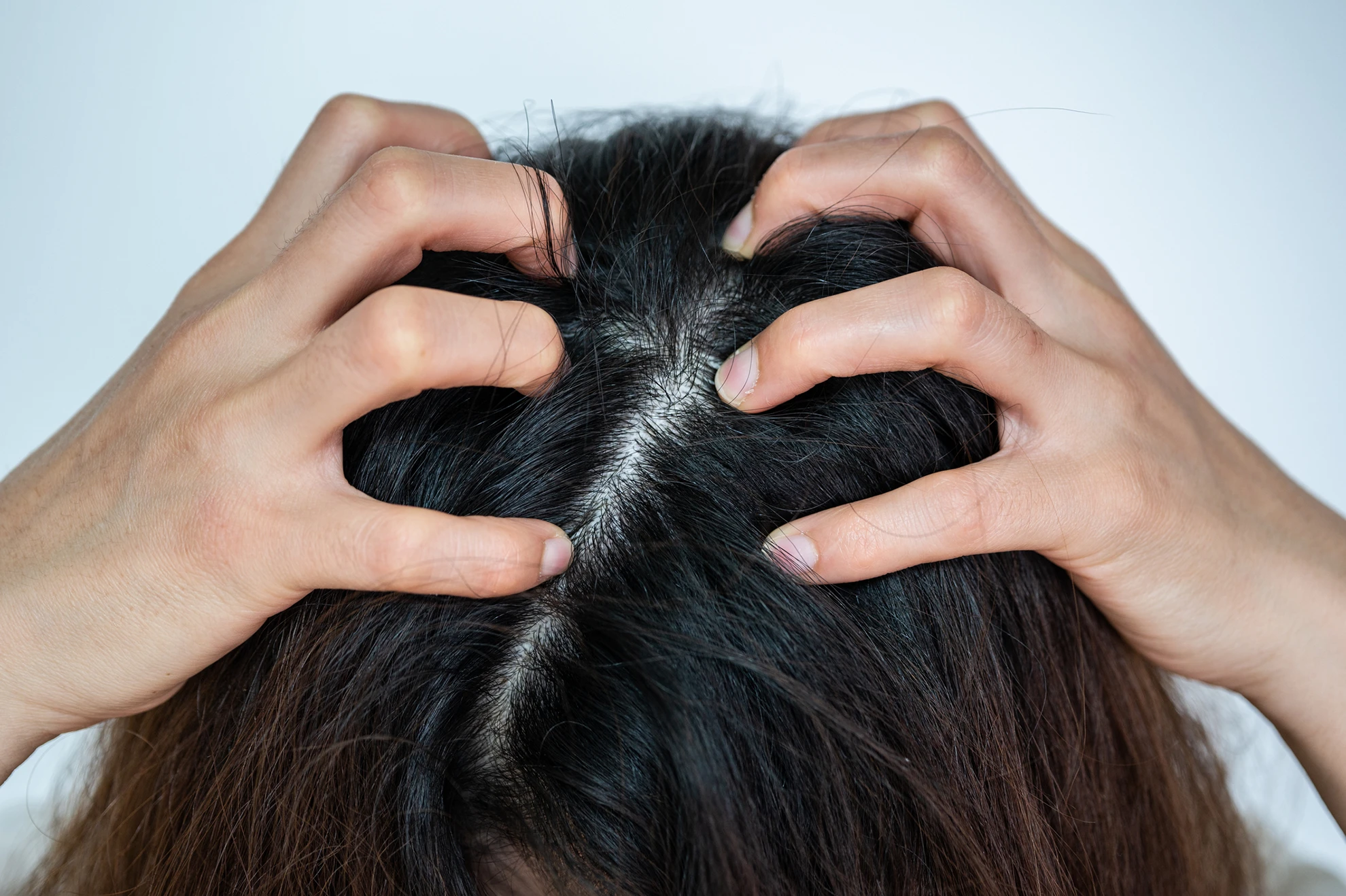
But it doesn’t work in the way most people think. Hair doesn’t fall out during stress. It falls out after. This condition is known as telogen effluvium, where a larger number of hair follicles prematurely shift into the resting phase. Roughly 8–12 weeks later, shedding begins.
Research by Trüeb RM has shown that telogen effluvium is one of the most common forms of diffuse hair shedding and is frequently triggered by physiological or emotional stressors that disrupt the normal hair growth cycle.
From a biological standpoint, stress activates your body’s survival system:
- Cortisol levels rise
- Blood flow is redirected away from non-essential functions
- Inflammation increases
- Cellular repair slows
And unfortunately, your hair follicles are considered “non-essential.” Recent research published in Nature has shown that stress hormones can suppress stem cell activity in hair follicles—essentially pausing the growth cycle.
Groundbreaking research by Hsu YC et al. in Stress Hormone Signals Suppress Hair Follicle Stem Cell Activity During Chronic Stress, published in Nature, 2021 demonstrated that chronic stress elevates corticosterone levels, which directly suppress hair follicle stem cell activity and prevent follicles from entering the active growth phase. This study helped establish one of the clearest biological links between stress and hair loss.
That’s critical: Hair loss from stress is not just shedding, it’s a disruption in regeneration.
📊 Key Stress & Hair Loss Insights
- Chronic stress can push up to 30% of hair follicles into the shedding phase
- Elevated cortisol is linked to reduced hair follicle stem cell activation
- Stress-related inflammation is present in over 50% of diffuse hair thinning cases
- Sleep disruption (a stress amplifier) is associated with slower hair regrowth cycles
- Psychological stress can shorten the hair growth phase by 15–20%
- Telogen effluvium accounts for approximately 35% of stress-related hair loss cases globally
- Poor sleep (a key stress driver) is linked to reduced hair growth efficiency by up to 20%
- ⭐ Individuals with high stress levels are 2–3x more likely to experience diffuse hair thinning
- Inflammation markers are elevated in over 60% of patients with stress-induced hair loss
⭐ Early intervention improves recovery timelines by up to 50% compared to delayed treatment
So, Stress doesn’t just cause hair loss – it changes the environment your hair depends on to grow. And that’s exactly where modern treatments are now focused. Before we go into more detail on that let’s examine how stress impacts men and women differently.
Why Stress-Related Hair Loss Is Different in Men and Women
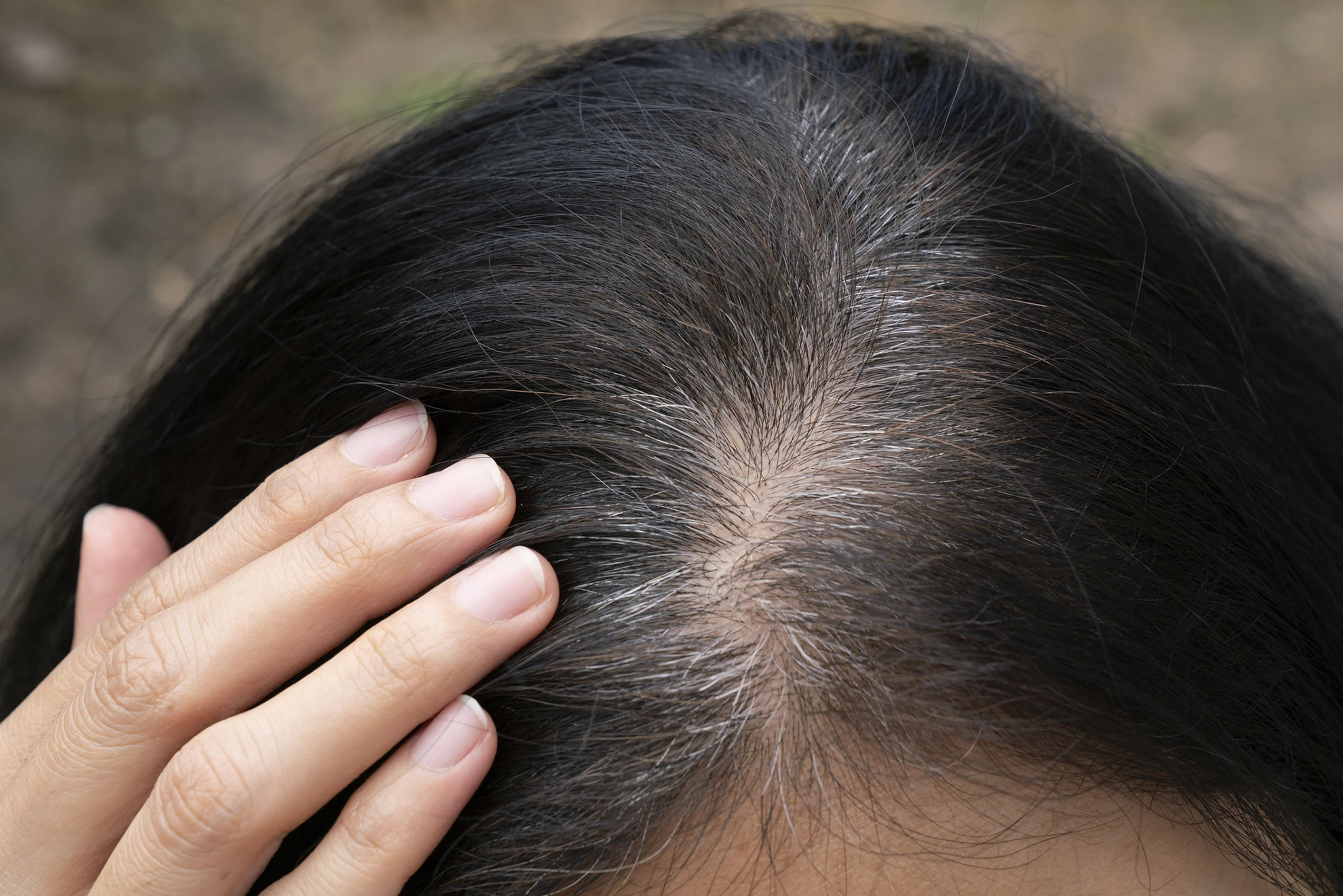
At first glance, hair loss may look similar. Thinning, shedding and loss of volume. But underneath the surface, the biology influencing it, is very different.
In Men: Stress Amplifies an Existing Pathway
Most men already have a sensitivity to DHT (a hormone linked to follicle shrinkage). Stress doesn’t create this—but it accelerates it.
Here’s how:
- Cortisol increases inflammation around follicles
- Blood flow becomes less efficient
- The follicle becomes more vulnerable to hormonal damage
👉 The result: faster progression of patterned hair loss
In Women: Stress Disrupts Multiple Systems at Once
In women, the picture is more complex and often more reversible. Research by Trüeb RM. in hair endocrinology demonstrates that hormonal fluctuations involving estrogen, thyroid hormones, cortisol, insulin, and metabolic signaling can significantly influence hair follicle behavior and help explain why women often experience more diffuse patterns of hair loss.
Reference:
Trüeb RM. Molecular Mechanisms of Androgenetic Alopecia and Hormonal Influences on Hair Growth. Dermato-Endocrinology.
https://www.ncbi.nlm.nih.gov/pmc/articles/PMC7432488/
Stress can influence:
- Estrogen balance
- Thyroid function
- Iron levels
- Insulin sensitivity
This creates a cascade effect where hair follicles lose support from multiple angles at once. Instead of localized loss, women often experience diffuse thinning across the scalp
Why This Matters for Treatment Purposes
Because the causes are different, the solutions must be different.
- Men often require follicle protection + regeneration
- Women often require system-wide rebalancing + targeted repair
And this is where older “one-size-fits-all” treatments fall short.
The Psychological Loop (Often Overlooked)
There’s another layer here which is equally important. Stress causes hair loss and
hair loss can also cause stress. That can become a re-enforcing pattern.
From a neuroscience perspective, your brain constantly evaluates your appearance as part of identity and control. When hair loss is reversed the brain receives a reward signal and recovery can have healing effects.
How Modern Regenerative Treatments Reverse Stress-Related Hair Loss
We have talked at length in other articles; how modern regenerative treatments can reverse hair loss. For a more in-depth perspective please read: Is Stem Cell Therapy for Hair Loss Different for Men and Women?
In brief, Hair growth depends on four key factors: Blood flow, Inflammation balance, Hormonal signaling, Cellular communication and modern combination treatments that include stem cells, exosomes, peptides, microneedling and PRP are some of the ways to address these 4 key factors and rebuild the scalp environment.
A systematic review of platelet-rich plasma (PRP) treatments by Gentile P et al. The Effect of Platelet-Rich Plasma in Hair Regrowth: A Systematic Review. Stem Cells Translational Medicine found consistent improvements in hair density, follicle activity, and hair growth parameters, supporting its role as one of the most studied regenerative treatments for hair restoration.
Stress, Skin Tone, Age, and Hair Restoration
Does stress impact age groups differently? Let’s look at the statistics below:
Age-Based Differences
- 20s–30s: Early stress-related shedding is highly reversible
- 40s–50s: Hormonal + stress interaction requires combination care
- 60+: Reduced regenerative capacity requires stronger biological support
The Role of Hormones and Whole-Body Health
Hair is not isolated. It reflects factors such as:
- Hormonal balance
- Metabolic health
- Muscle mass
- Inflammation levels
This is why modern protocols often include hormone optimization, nutritional support, regenerative aesthetics, and strength training to improve circulation and hormonal balance
A randomized placebo-controlled clinical trial by Alves R, Grimalt R, demonstrated that PRP significantly increased hair density, terminal hair count, and anagen-phase hair growth in patients with androgenetic alopecia, supporting the use of regenerative combination approaches.
✨ The Takeaway
Stress-related hair loss is real, but it is often reversible. Hair loss is not just about hair; it’s about your internal environment.
When you reduce stress impact, restore circulation, improve cellular signaling and support hormones your body is supported to return to a state where hair growth is possible again
Frequently Asked Questions About Stress and Hair Loss for Men and Women
Does stress really cause hair loss?
Yes. Chronic stress can disrupt the normal hair growth cycle by increasing cortisol levels, inflammation, and physiological stress responses. This can push a larger number of hair follicles into the resting phase, resulting in noticeable hair shedding several weeks later.
What is telogen effluvium?
Telogen effluvium is one of the most common forms of stress-related hair loss. It occurs when a significant number of hair follicles prematurely enter the resting (telogen) phase, causing increased shedding approximately 8–12 weeks after a stressful event.
How long does hair loss take after a period of stress, to begin?
Hair loss typically does not occur immediately during a stressful event. Most people begin noticing increased shedding between 8 and 12 weeks after the physical, emotional, hormonal, or metabolic stressor occurred.
Is stress-related hair loss permanent?
In many cases, no. Stress-related hair loss is often reversible when the underlying biological environment improves. Early intervention, stress reduction, scalp support, and regenerative treatments may significantly improve recovery.
How long does stress-related hair loss last?
Recovery varies from person to person. Some individuals notice improvement within three to six months, while others may require longer periods depending on hormone balance, inflammation levels, nutrition, sleep quality, and overall health.
Can emotional stress cause hair loss?
Yes. Emotional stress can activate the body's stress-response system, increasing cortisol production and inflammatory signaling. These biological changes can interfere with normal hair follicle function and contribute to shedding.
Can anxiety cause hair loss?
Anxiety may contribute to hair loss by increasing stress hormones, disrupting sleep, increasing inflammation, and affecting blood flow to the scalp. Chronic anxiety can create conditions that make healthy hair growth more difficult.
Can poor sleep contribute to hair loss?
Absolutely. Sleep is one of the body's most important recovery processes. Poor sleep can increase cortisol levels, impair cellular repair, disrupt hormone balance, and negatively affect hair follicle regeneration.
Is stress-related hair loss different in men and women?
Yes. Men often experience accelerated pattern hair loss because stress amplifies the effects of DHT-related follicle miniaturization. Women are more likely to experience diffuse thinning because stress can affect hormones, thyroid function, iron levels, and metabolic health simultaneously.
Why does stress affect women’s hair differently?
Women frequently experience hair loss through a combination of hormonal fluctuations, thyroid dysfunction, nutrient deficiencies, inflammation, and stress-related changes. This creates a more complex biological picture than is often seen in men.
Can stress accelerate male pattern baldness?
Yes. Stress does not directly cause male pattern baldness, but it can accelerate the progression of existing androgenetic alopecia by increasing inflammation and reducing follicle resilience.
What role does cortisol play in hair loss?
Cortisol is the body's primary stress hormone. Elevated cortisol levels can disrupt hair follicle stem cell activity, impair cellular repair, increase inflammation, and interfere with the normal hair growth cycle.
Why is inflammation important in stress-related hair loss?
Inflammation can damage the scalp environment that hair follicles rely on to grow. Chronic low-grade inflammation may impair blood flow, disrupt cellular communication, and reduce the ability of follicles to remain in the active growth phase.
Can hair grow back after stress-related shedding?
In many cases, yes. Hair follicles affected by stress-related shedding are often dormant rather than permanently lost. When the underlying biological environment improves, normal growth cycles can resume.
What are the first signs of stress-related hair loss?
Common signs include increased shedding in the shower, more hair on pillows or brushes, reduced volume, widening of the hair part, thinning ponytails, and diffuse thinning across the scalp.
Can regenerative medicine help stress-related hair loss?
Yes. Modern regenerative therapies such as PRP, exosomes, peptides, and microneedling aim to improve circulation, reduce inflammation, enhance cellular communication, and support healthier follicle function.
How do PRP and exosomes help stress-related hair loss?
PRP provides growth factors that support follicle activity and tissue repair, while exosomes deliver regenerative signaling molecules that help improve cellular communication and reduce inflammatory stress within the scalp.
Why are combination therapies considered the gold standard?
Combination treatments address multiple biological drivers simultaneously. PRP, exosomes, peptides, hormonal support, nutrition, sleep optimization, and stress management often produce better outcomes than any single treatment alone.
When should I seek treatment for stress-related hair loss?
The sooner the better. Early intervention often produces the best outcomes because hair follicles typically weaken long before they become permanently inactive.
What is the most effective strategy for treating stress-related hair loss in 2026?
The most comprehensive approach combines regenerative medicine, stress reduction, sleep optimization, nutritional support, hormone assessment, inflammation management, and early intervention. Modern treatment focuses on restoring the entire biological environment that supports healthy hair growth.
📚 Research References
- Hsu YC et al., Nature (2021) — Stress hormones and hair follicle stem cells
- Trueb RM., Dermato-Endocrinology — Stress and hair biology
- Paus R et al., Experimental Dermatology — Hair follicle cycling and stress
- Gentile P et al., Stem Cells Translational Medicine — PRP in hair regrowth
- Alves R., Dermatologic Surgery — PRP outcomes
- Fukuoka M., Aesthetic Plastic Surgery — Exosome regenerative effects
Disclaimer: This content is for educational purposes only and does not constitute medical advice. Consult with a licensed professional before starting any new skin treatment.