Does Menopause Cause Joint Pain? Signs, Causes, Statistics & Treatments (2026 Guide)
Medically Reviewed by: Dr. Simran Sethi – Regenerative Medicine & Dermatology Specialist
Last Updated: June 8, 2026
Many women are surprised when joint pain suddenly appears during midlife. Knees feel stiff when getting out of bed. Fingers ache when they grip objects. Hips or shoulders feel sore after a normal day. Naturally, the question arises: Is joint pain actually related to menopause, or is it just a coincidence?
Modern medical science is very clear on this point. Joint pain during menopause is not a myth – it is a common and well-documented symptom. In fact, researchers estimate that over 50% of women experience some form of joint discomfort during the menopausal transition.
According to the International Menopause Society, menopause is associated with systemic changes that affect inflammation, connective tissue, and musculoskeletal health.
The reason lies in the fascinating biology of hormones, inflammation, collagen, and cellular repair. Understanding this connection helps explain not only why menapause joint pain occurs, but also what modern medicine can do to help women feel strong, mobile, and confident through this stage of life.
Let’s explore the science behind menopause and joint health.
The Biology Behind Menopause and Joint Pain
To understand why joint pain occurs during menopause, we need to look at the role of estrogen in the body.
Estrogen is often thought of as a reproductive hormone, but its influence goes far beyond that. It plays a powerful role in maintaining:
• joint lubrication
• collagen production
• cartilage health
• muscle repair
• inflammation control
When estrogen levels decline during menopause, several changes occur simultaneously.
Clinical insights from the Endocrine Society show that declining estrogen impacts connective tissue integrity, inflammation levels, and tissue repair.
First, the body produces less collagen, the structural protein that supports joints, skin, tendons, and ligaments. Research suggests women may lose up to 30% of collagen in the first five years after menopause.
Second, inflammation tends to increase. Scientists refer to this as “inflammaging”—a chronic low-level inflammatory state that can affect joints, muscles, and connective tissues.
Third, the body’s ability to repair tissues slows down. Cells communicate using biochemical signals, and aging can weaken those signals.
Together, these changes can make joints feel:
• stiff
• sore
• inflamed
• less flexible
This is why joint pain often appears during perimenopause and early menopause, even in women who have previously had no joint problems.
From a neuroscience perspective, joint pain also affects how the brain processes movement and motivation. When joints hurt, the brain naturally becomes more cautious about movement. This can lead to reduced physical activity, which may further weaken muscles that stabilize joints.
Understanding this connection is empowering because it shows that joint pain during menopause has a clear biological explanation—and therefore potential solutions.
How Common Is Perimenopause Joint Pain and Joint Pain During Menopause?
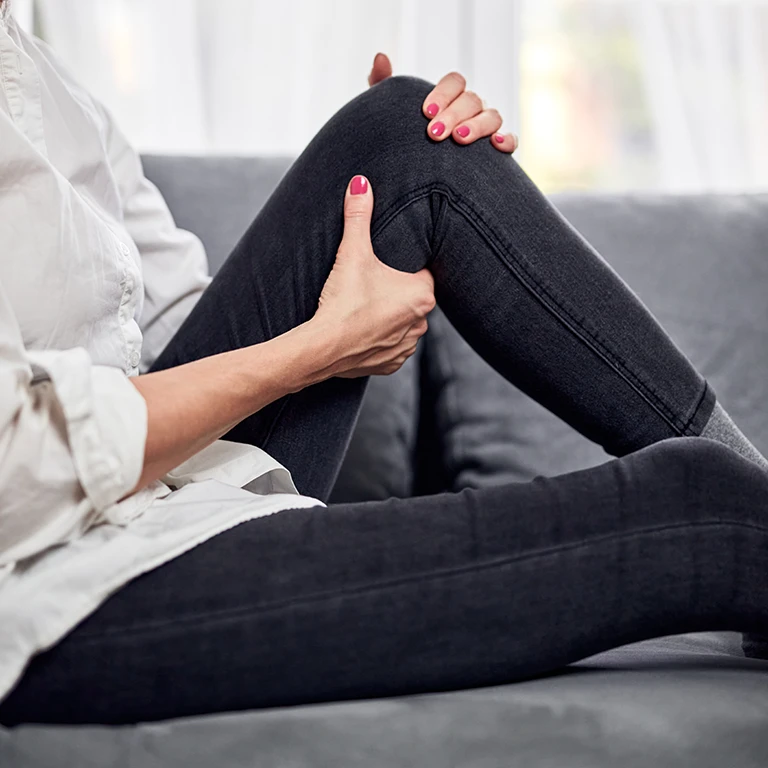
Joint pain is one of the most common but least discussed menopause symptoms. We hear this from a lot of our patients. They sometimes don’t connect the dots that the two are related.
Several studies have examined how frequently it occurs.
Research published in the Journal of Mid-Life Health found that over 60% of menopausal women report experiencing musculoskeletal pain, including joint stiffness and aches.
Another large population study found that approximately half of women aged 45–55 report new joint pain during the menopausal transition.
These symptoms often affect areas such as:
• knees
• shoulders
• hips
• fingers
• wrists
• lower back
Many women describe the sensation as morning stiffness or discomfort after periods of inactivity.
The connection between menopause and joint pain is so strong that some doctors refer to it as “menopausal arthralgia.”
Interestingly, joint discomfort may appear before hot flashes or other classic symptoms, making it an early signal of hormonal changes.
There is also evidence that skin biology and connective tissue health are closely linked to joint health. Both rely heavily on collagen and elastin, which are influenced by estrogen levels.
This is why many women simultaneously notice:
• skin thinning
• reduced skin elasticity
• hair changes
• joint stiffness
These symptoms reflect the same underlying biological shift.
How Prevalent is Pain and Menopause – The Statistics
Studies referenced by the National Institutes of Health show that over 50–60% of women experience musculoskeletal discomfort during menopause.
• Joint cartilage thickness can decline by up to 10–15% with age and hormonal changes, reducing shock absorption and joint comfort
• Estrogen receptors are present in joint tissues, and declining estrogen is associated with increased joint inflammation markers in midlife women
• Women are 2–3 times more likely than men to develop osteoarthritis after menopause, highlighting the hormonal connection to joint health
• Tendon and ligament elasticity can decrease by up to 20% with aging, contributing to stiffness and reduced joint flexibility
• Nearly 50% of women report reduced mobility or activity levels due to joint discomfort during menopause, which can further impact muscle strength and joint stability
Signs Your Joint Pain May Be Related to Menopause
Many women are surprised to learn that joint discomfort can be part of the menopausal transition. If you are experiencing several of the symptoms below, hormonal changes may be contributing to your joint pain.
Common signs of menopause-related joint pain include:
• stiffness in the knees, hips, or shoulders when waking up
• aching joints after periods of inactivity
• reduced flexibility in fingers, wrists, or ankles
• soreness that improves once you start moving
• joint discomfort that began during perimenopause or early menopause
• joint pain appearing alongside other menopause symptoms such as sleep disruption, dry skin, or hair thinning
These symptoms occur because declining estrogen levels can affect collagen production, inflammation levels, and joint lubrication, all of which play a role in maintaining healthy connective tissue.
The American College of Obstetricians and Gynecologists notes that musculoskeletal symptoms frequently appear alongside other menopause-related changes such as sleep disruption and skin changes.
If joint discomfort begins suddenly during midlife – especially between ages 40 and 55 – it may be helpful to discuss these symptoms with a healthcare professional who understands menopause-related changes.
Early evaluation can help identify whether joint pain is related to:
• hormonal changes
• inflammation
• muscle loss
• connective tissue decline
Addressing these factors early can help preserve mobility, strength, and overall quality of life.

Do Different Skin Types Experience Joint Symptoms Differently?
Joint pain itself does not necessarily differ dramatically across skin tones, but underlying connective tissue biology can vary between individuals based on genetics, lifestyle, and skin structure.
Women with different skin types may notice different combinations of symptoms. For example:
Women with lighter skin types may experience earlier visible collagen decline in the skin, which can sometimes correlate with connective tissue changes elsewhere in the body.
Women with melanin-rich skin often maintain visible skin elasticity longer, but they may still experience joint symptoms internally because estrogen decline affects the entire body.
Another important factor is muscle health.
Muscles stabilize joints and reduce strain on ligaments and cartilage. During menopause, muscle mass can decline—a process known as sarcopenia.
Loss of muscle support around joints can increase stress on joint structures, contributing to discomfort. The American College of Sports Medicine emphasizes that muscle mass plays a critical role in stabilizing joints and reducing stress on connective tissue.
This is why modern menopause care often focuses on:
• maintaining muscle mass
• supporting collagen production
• reducing inflammation
• improving circulation
These factors support both joint health and skin health, highlighting how interconnected the body’s systems truly are.
Modern Treatments for Menopause-Related Joint Pain
The exciting news is that modern medicine offers several strategies that may help support joint health during menopause.
Hormone Replacement Therapy (HRT)
For some women, restoring estrogen levels through hormone therapy may improve joint comfort. Research has shown that estrogen may help regulate inflammation and support connective tissue health.
However, hormone therapy is not appropriate for everyone, and treatment decisions should be individualized.
Strength Training and Muscle Support
Building and maintaining muscle is one of the most effective ways to protect joints.
Muscles act like natural shock absorbers, stabilizing joints and reducing strain on cartilage.
Resistance training can help maintain:
• muscle mass
• bone density
• joint stability
PRP (Platelet-Rich Plasma) Therapy
PRP therapy uses growth factors derived from a patient’s own blood to stimulate tissue repair.
These growth factors may help support healing in joints, tendons, and ligaments.
PRP has been widely studied for conditions such as knee osteoarthritis and tendon injuries.
Stem Cell and Regenerative Medicine
Emerging regenerative treatments use stem cell–derived signaling molecules to help stimulate cellular repair and reduce inflammation.
These therapies aim to support:
• cartilage repair
• joint lubrication
• tissue regeneration
Research in regenerative medicine continues to evolve rapidly, offering new possibilities for supporting healthy aging.
Lifestyle and Anti-Inflammatory Strategies
Joint health also benefits from lifestyle factors such as:
• anti-inflammatory nutrition
• adequate sleep
• stress management
• maintaining a healthy weight
Reducing inflammation can improve both joint comfort and overall metabolic health. The Mayo Clinic emphasizes the importance of sleep, nutrition, and weight management in reducing joint strain and inflammation.
The Psychological and Longevity Perspective
Joint pain during menopause is more than a physical symptom—it can influence confidence, mobility, and quality of life.
When joints feel strong and flexible, women are more likely to remain active. Physical activity supports:
• muscle strength
• bone density
• cardiovascular health
• mental resilience
From a neuroscience perspective, movement also activates dopamine and endorphin pathways, improving mood and motivation.
This creates a powerful positive cycle: better mobility leads to better health and well-being.
So, Is Joint Pain a Symptom of Menopause?
Yes. Joint pain is a common symptom during the menopausal transition. Declining estrogen levels can affect inflammation, collagen production, and cartilage repair, which may lead to stiffness, soreness, and reduced flexibility in the joints. Modern treatments and lifestyle strategies can help support joint health and improve mobility.
The Key Takeaway for Menopause and Joint Pain
Joint pain during menopause is not a myth—it is a real and common biological response to hormonal changes.
Declining estrogen can affect collagen, inflammation, muscle mass, and tissue repair, all of which influence joint health.
The encouraging news is that modern treatments—from hormone therapy and strength training to regenerative medicine and PRP—offer meaningful ways to support joint function and mobility.
By understanding the science and acting early, women can maintain strong joints, healthy skin, and an active lifestyle well beyond menopause.
Menopause is not the end of vitality—it can be the beginning of a new phase of strength, resilience, and longevity.
For a pre-menopause or post-menopause consultation to optimize your muscle and biology please schedule a consultation
Frequently Asked Questions About Menopause and Joint Pain
Does menopause cause joint pain?
Yes. Joint pain is a common symptom during perimenopause and menopause. As estrogen levels decline, inflammation can increase and collagen production decreases. These changes affect cartilage, ligaments, and joint lubrication, which can lead to stiffness, aching, and reduced flexibility in areas such as the knees, hips, shoulders, and fingers.
How common is joint pain during menopause?
Joint pain is very common during menopause. Research suggests that more than 50–60% of women experience musculoskeletal pain during the menopausal transition. This pain often appears as stiffness in the morning or soreness in the knees, hips, shoulders, or hands.
Why do joints hurt more during menopause?
Joints may hurt more during menopause because estrogen helps regulate inflammation and maintain collagen in connective tissues. When estrogen declines, joints may become less lubricated and cartilage repair slows. This can increase stiffness, inflammation, and sensitivity in joints.
What joints are most affected during menopause?
The joints most affected during menopause include:
• knees
• shoulders
• hips
• fingers and wrists
• lower back
Many women notice stiffness after waking up or after sitting for long periods.
Can menopause joint pain go away?
Yes. For many women, joint pain improves when inflammation is managed and muscle strength is maintained. Treatments such as exercise, hormone therapy, regenerative medicine, PRP therapy, and anti-inflammatory lifestyle changes can significantly improve joint comfort and mobility.
Does menopause joint pain affect women of different skin tones differently?
Menopause-related joint pain occurs across all skin tones because it is primarily driven by hormonal changes. However, differences in connective tissue biology, genetics, lifestyle, and muscle mass can influence how symptoms appear or how severe they become.
What treatments help menopause-related joint pain?
Several treatments may help support joint health during menopause, including:
• hormone replacement therapy (HRT)
• strength training to maintain muscle support
• platelet-rich plasma (PRP) therapy
• regenerative medicine and stem cell therapies
• anti-inflammatory nutrition and lifestyle changes
A personalized treatment plan usually produces the best results.
When should I see a doctor about menopause joint pain?
You should consider medical evaluation if joint pain:
• becomes persistent or severe
• limits normal movement
• causes swelling or redness
• interferes with sleep or daily activities
Early evaluation helps identify hormonal, inflammatory, or structural causes and allows treatment to begin sooner.
Can exercise help menopause joint pain?
Yes. Regular exercise is one of the most effective ways to support joint health during menopause. Strength training helps maintain muscle mass, which stabilizes joints and reduces stress on cartilage. Low-impact activities such as walking, swimming, yoga, and resistance training can improve flexibility and reduce stiffness.
Does menopause joint pain mean arthritis?
Not necessarily. While menopause can increase joint discomfort, it does not automatically mean arthritis is present. Many women experience temporary joint stiffness related to hormonal changes, inflammation, or muscle loss rather than permanent joint disease.
Research Support
- Brincat M et al., Maturitas (2005) — Estrogen and collagen loss during menopause
- Szoeke CE et al., Menopause Journal (2008) — Joint pain prevalence in menopausal women
- Franceschi C et al., Nature Reviews Immunology (2007) — Inflammaging and aging biology
- Greising SM et al., Frontiers in Physiology (2018) — Estrogen and muscle metabolism
- Filardo G et al., American Journal of Sports Medicine (2015) — PRP therapy for joint disorders
- Caplan AI., Stem Cells Translational Medicine (2017) — Stem cells and regenerative medicine for musculoskeletal repair
Disclaimer: This content is for educational purposes only and does not constitute medical advice. Consult with a licensed professional before starting any new skin treatment.